
Most training businesses do not lose revenue because they lack demand. They lose it in the handoff between inquiry and enrollment. A lead comes in after hours, a class reminder goes out late, a certificate follow-up never gets sent, or a returning student slips through the cracks. That is why choosing the best CRM for training providers is less about contact storage and more about operational control.
For CPR training companies, healthcare educators, compliance trainers, and private course providers, the right system has to do more than track names and emails. It needs to help you respond fast, fill seats, reduce no-shows, collect payments, and bring students back when renewals are due. If your current setup depends on a calendar app, a form tool, a texting platform, spreadsheets, and manual reminders, you do not have a CRM problem alone. You have a workflow problem.
What the best CRM for training providers needs to solve
Training providers run on timing. Leads often compare several options before booking. Students need reminders before class. Staff need visibility into who paid, who rescheduled, and who needs post-course follow-up. Months later, those same students may be due for recertification. A generic CRM may handle one or two of those jobs, but training businesses need all of them connected.
That is the real standard. The best system should keep your front-end sales process tied to your delivery process and your retention process. If your team has to move data manually between tools, errors multiply and speed drops.
In practice, that means a CRM for a training provider should support lead capture, pipeline tracking, appointment or class scheduling, automated reminders, two-way texting and email, payment collection, review requests, and re-engagement campaigns. If you offer recurring certifications or renewal-based programs, lifecycle follow-up matters just as much as first-time conversion.
Why many CRMs fall short for training businesses
A lot of CRM platforms were built for long sales cycles, not class-based operations. They are strong on deals, weak on attendance. They can track a prospect, but they do not help much when you need to send a reminder 24 hours before class, notify a student about a room change, or trigger recertification outreach 60 days before expiration.
Other systems are decent for email marketing but disconnected from scheduling and customer communication. That creates friction for small teams. Every extra login, spreadsheet export, or manual reminder becomes another point where a lead gets missed or a student has a poor experience.
For training providers, convenience is not the point. Responsiveness is. If someone asks about a class and waits half a day for a reply, that delay can cost you the booking. If a student forgets an upcoming session because your reminders are inconsistent, that no-show hits revenue immediately.
How to evaluate the best CRM for training providers
Start with your daily workflow, not a feature checklist. Look at the points where staff lose time or revenue. Usually, the pattern is predictable: missed inquiries, slow follow-up, no-shows, unpaid bookings, poor visibility, and weak retention after the class is over.
A strong CRM should tighten each of those areas.
Lead response and intake
Your CRM should capture inquiries from forms, calls, and messages in one place, then route them into a clear pipeline. Fast acknowledgment matters. Automated first-response messages can buy your team time while keeping the lead warm.
For providers running multiple course types, tagging and segmentation also matter. A CPR renewal lead should not get the same follow-up as a corporate onsite training prospect. The system should let you separate those paths without creating administrative overhead.
Scheduling and reminders
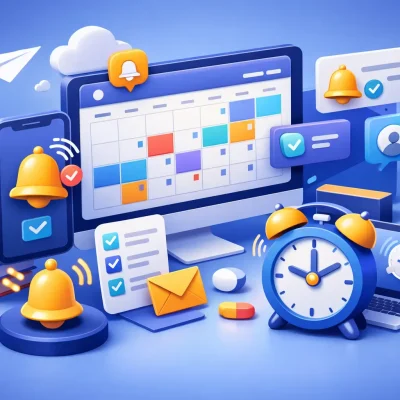
Training businesses live and die by attendance. Your CRM should support booking workflows that are easy for students and easy for staff to manage. That includes confirmation messages, reminder sequences, rescheduling controls, and internal visibility into upcoming appointments or classes.
The trade-off here is flexibility versus simplicity. Some businesses need highly customized scheduling logic for multiple instructors, locations, or private sessions. Others just need a dependable booking process that cuts back-and-forth communication. The best fit depends on how complex your operation is today and how complex you want it to become.
Payments and enrollment tracking
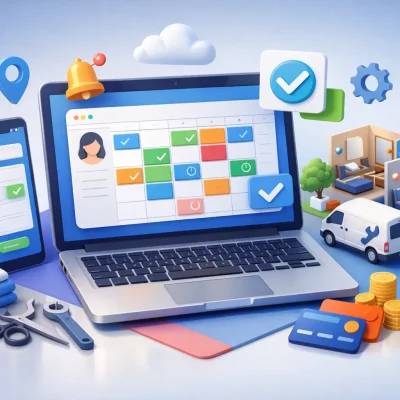
If your team is chasing invoices in one tool and checking attendance in another, that slows everything down. A CRM that connects payments to bookings gives you a cleaner view of who is confirmed, who still owes, and which classes are actually full.
This is especially useful for smaller providers where one person may be handling sales, scheduling, customer service, and front-office tasks. Consolidation reduces errors and speeds up decision-making.
Ongoing communication
Email still matters, but text messaging is often where training providers see the fastest response. Students answer texts faster than emails, especially when they are confirming attendance, asking logistical questions, or requesting a reschedule.
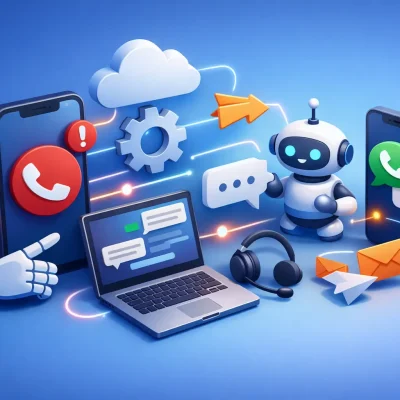
A CRM with two-way messaging gives your team a direct line to prospects and enrolled students without bouncing between inboxes and personal phones. That is not just cleaner operationally. It also creates a more professional experience.
Retention and recertification
For certification-based businesses, the sale does not end when the class ends. Recertification, advanced courses, refresher training, and employer group bookings all come from consistent follow-up.
This is where automation has outsized value. A CRM should let you trigger post-class messages, review requests, certificate-related communication, and renewal reminders based on time or status. If that process depends on staff memory, it will break under volume.
Best-fit CRM traits for different training models
Not every provider needs the same setup. A solo CPR instructor has different needs than a multi-location healthcare training business. The best CRM for training providers depends on delivery model, class frequency, and how much communication happens before and after the course.
If you run high-volume public classes, you need strong scheduling, reminders, payment tracking, and quick communication. If you focus on private or corporate bookings, pipeline visibility and lead nurturing become more important. If your revenue depends on recurring certifications, long-term automation matters most.
This is where many businesses overbuy. They sign up for a system designed for enterprise sales teams and end up using 15 percent of it. For most small to midsize training providers, the better choice is a platform that combines CRM, scheduling, messaging, automation, and operational follow-up in one environment.
What to look for in a unified platform
A unified system is usually the most practical option for service-based training businesses because it reduces handoffs. Instead of connecting five separate tools, your team works from one source of truth.
That matters in everyday situations. A lead asks about next week’s class, books, gets automated reminders, pays, attends, receives a review request, and later gets a recertification message. When all of that happens inside one platform, follow-up gets faster and reporting gets clearer.
This is also where platforms built for service operations tend to outperform general-purpose CRMs. They are better aligned with booked appointments, recurring communication, and post-service engagement. For many training providers, a system like ResQEngage makes sense because it brings lead management, texting, scheduling, reminders, payments, and retention workflows together instead of forcing staff to manage disconnected apps.
Common mistakes when choosing a CRM
The biggest mistake is choosing based on brand recognition instead of fit. A well-known CRM is not automatically the right CRM for a training business. If it cannot support your booking and follow-up process without heavy customization, your team will work around it instead of in it.
The second mistake is underestimating implementation. Even the right platform fails if your pipelines, templates, reminders, and automations are not set up properly. Training providers should look for systems that are straightforward to launch and practical to maintain.
The third mistake is focusing only on sales. Enrollment matters, but so do attendance, student experience, reviews, and repeat business. A CRM should help you run the whole customer journey, not just the first inquiry.
So what is the best CRM for training providers?
The best choice is the one that matches how your business actually runs. For most training providers, that means a CRM that combines lead capture, booking, reminders, messaging, payments, and long-term follow-up in one place. If your current tools are fragmented, your staff is doing too much manual work, and students are falling through the cracks, a unified platform will usually deliver the biggest operational gain.
Do not ask which CRM has the longest feature list. Ask which one helps you respond faster, fill more seats, reduce no-shows, and keep students coming back. That is the standard that matters.
If you are evaluating options, map one real student journey from first inquiry to renewal. The right CRM should make that journey easier for your staff and more consistent for your customers. When it does, growth stops depending on memory and hustle alone.