
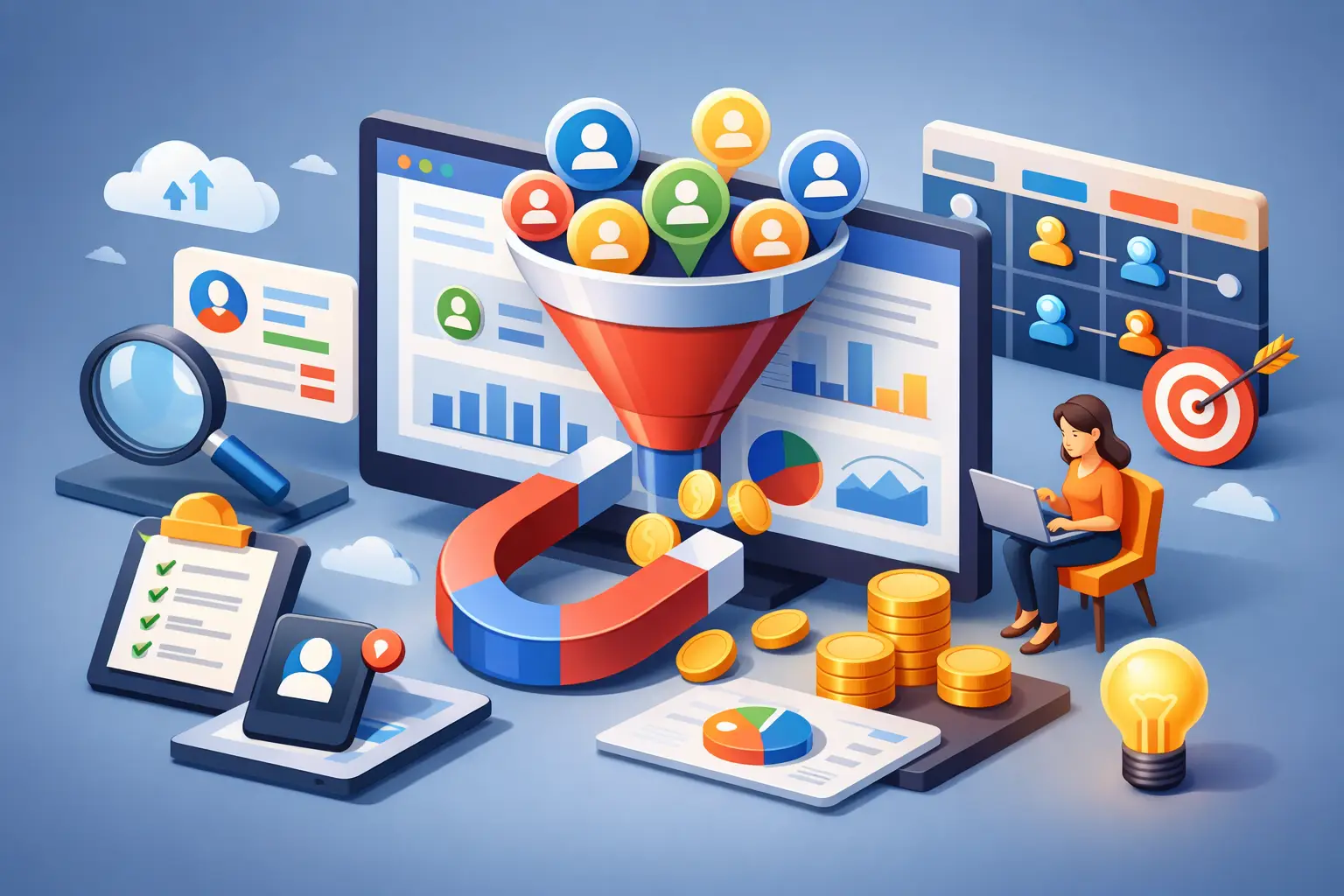
A new inquiry comes in at 8:12 AM. By 9:30, your team is already handling appointments, returning calls, and dealing with the day’s schedule. That lead sits in a text thread, an email inbox, or a sticky note until someone remembers it. For service businesses, that gap is where revenue disappears. So, what is lead management software? It is the system that captures incoming leads, organizes them, assigns follow-up, tracks every conversation, and moves people toward a booked appointment or sale.
For businesses that live on response time and consistent communication, lead management software is not just a nicer contact list. It is an operating system for converting interest into action. If your business depends on calls, forms, messages, estimates, consultations, classes, or recurring appointments, this software gives structure to the part of the customer journey that often gets handled manually and inconsistently.
What is lead management software and what does it do?
Lead management software helps you control what happens after a prospect raises their hand. That could mean they filled out a website form, called your office, replied to an ad, sent a message from social media, or were added from an event or referral. Instead of letting that information scatter across apps and staff members, the software puts it in one place and starts a process.
At a basic level, it stores lead details and records activity. At a useful level, it also handles assignment, reminders, status tracking, follow-up automation, and reporting. Better systems go further by tying lead activity directly to appointments, estimates, payments, review requests, and ongoing customer communication.
That distinction matters. Many businesses think they have lead management because they have a spreadsheet or a simple CRM. But if staff still have to remember who to call back, manually send reminders, and piece together conversations from different tools, the process is still fragile. Lead management software should reduce that friction, not document it after the fact.
Why service businesses need more than a basic CRM
A standard CRM can store names, notes, and tasks. For some sales teams, that is enough. For service businesses, it usually is not.
A clinic has to respond quickly, schedule consultations, send reminders, reduce no-shows, and follow up if a patient does not book. A CPR training provider may need to handle class inquiries, confirm registrations, send preparation details, and trigger renewal reminders later. A contractor needs to track estimate requests, dispatch follow-ups, and keep communication moving while jobs are scheduled. In each case, the lead does not just need to be recorded. It needs to be engaged.
That is why lead management software for service businesses tends to work best when it is connected to messaging, automation, calendar scheduling, and customer records. The more your revenue depends on timing and follow-through, the less useful disconnected systems become.
The core functions of lead management software
Most lead management software centers on a few operational jobs.
First, it captures leads from multiple sources. That includes website forms, phone calls, SMS, email, ad campaigns, landing pages, imports, and manual entry. The point is not just collection. It is making sure every inquiry enters a trackable workflow.
Second, it organizes and qualifies those leads. Your team can tag the source, service type, urgency, location, or other details that matter. This helps staff prioritize the right opportunities instead of treating every inquiry the same way.
Third, it manages follow-up. This is where software has the biggest impact. Automated texts, emails, reminders, task prompts, and pipeline stages make it harder for leads to go cold because someone got busy.
Fourth, it tracks pipeline movement. You can see who is new, contacted, scheduled, quoted, won, lost, or unresponsive. That visibility helps managers identify bottlenecks and helps staff know the next step without guessing.
Fifth, it reports on performance. You can measure response time, booking rates, source quality, conversion by service, team activity, and lead aging. Without that, growth decisions are based on gut feel more than operational data.
How lead management software works in practice
The value becomes clearer when you look at real workflows.
Imagine a home service business gets a form submission for an estimate request. Lead management software can capture the inquiry instantly, create a contact record, notify the right staff member, and send an automatic acknowledgment text within seconds. If the lead does not reply, the system can trigger another follow-up later that day. Once the customer books, the lead moves into an appointment workflow with reminders and updates.
Now picture a training company that gets class inquiries through ads and website forms. Instead of manually emailing every prospect, the system can assign them to a class-interest pipeline, send class options, prompt staff to call high-intent leads, and continue nurturing those who do not enroll right away. After the class, that same record can be used for renewal reminders and review requests.
This is where lead management stops being a front-end sales tool and starts becoming part of daily operations. The software is not only helping you get the lead. It is helping you handle what happens next.
What to look for if you are evaluating lead management software
If you are comparing platforms, start with your workflow, not a feature checklist. The best software is the one that matches how your business actually books, follows up, and serves customers.
Look closely at lead capture and speed-to-response tools. If a platform cannot quickly route new inquiries and trigger immediate communication, your staff will still be playing catch-up.
Pay attention to messaging and automation. For service businesses, follow-up often happens across text, email, and phone. If those tools are separate, your team loses context and consistency. Automation should also be practical. It should handle reminders, missed responses, appointment confirmations, and post-service outreach without making communication feel mechanical.
Scheduling matters too. If your team has to jump into another platform just to book an appointment, there is a break in the process. The stronger option is software that keeps lead tracking and booking connected.
You should also consider ease of use. A powerful platform that nobody updates correctly becomes expensive shelfware. Owners and staff need clear pipelines, simple communication history, and straightforward reporting.
Finally, think beyond the first conversion. Some businesses only need to track a lead until it books. Others need the same system to manage long-term follow-up, repeat services, payment requests, reputation management, or renewal cycles. That is where an all-in-one platform may make more operational sense than a narrow lead tool.
Common problems lead management software solves
Most businesses do not go looking for lead management software because they want more software. They do it because something is already breaking.
The first problem is missed follow-up. A lead comes in, but nobody responds quickly enough. Or someone responds once and then forgets to continue the conversation. Software adds accountability and timing.
The second is tool fragmentation. Leads live in one place, texts in another, appointments somewhere else, and customer notes in a third system. Staff waste time switching tabs and still miss details. Centralizing those actions improves both speed and accuracy.
The third is poor visibility. Owners often do not know which campaigns are producing real bookings, which staff members are following up consistently, or how many leads are stuck in limbo. Lead management software gives you that picture.
The fourth is inconsistent customer experience. One prospect gets a fast text response and easy booking. Another waits two days and gets a rushed voicemail. That inconsistency hurts trust before the sale even happens.
When lead management software may not be enough on its own
There are trade-offs. Not every lead management platform is built for service operations.
Some tools are designed mostly for traditional sales teams with long deal cycles and rep-driven pipelines. They may do a good job with contact records and opportunity stages, but fall short on appointment scheduling, text messaging, reminders, post-service follow-up, and repeat engagement.
That is why many service businesses eventually outgrow simple lead tools. If the software ends at the point of sale, you may still need separate systems for operations and customer communication. That can recreate the same fragmentation you were trying to fix.
For operators who want one system to manage leads, bookings, follow-up, payments, reviews, and ongoing relationships, a broader engagement platform can be the better fit. That is the thinking behind platforms like ResQEngage, which are built around the full communication and service workflow rather than contact storage alone.
What is lead management software really buying you?
At its best, lead management software buys control. It gives your business a repeatable process for handling inquiries instead of relying on memory, hustle, and whoever happens to be available.
It also buys speed. Leads are contacted faster, appointments are booked sooner, and fewer opportunities slip through because someone forgot the next step. Just as important, it buys consistency. Customers get timely responses and clearer communication, whether your business is handling ten inquiries a week or a hundred.
If your team is busy, your sales process is tied to appointments, and your follow-up still depends too much on manual effort, the real question is not what is lead management software. It is how much longer you want revenue to depend on scattered tools and staff memory.
The right system does not just help you track leads. It helps you run a more responsive business.